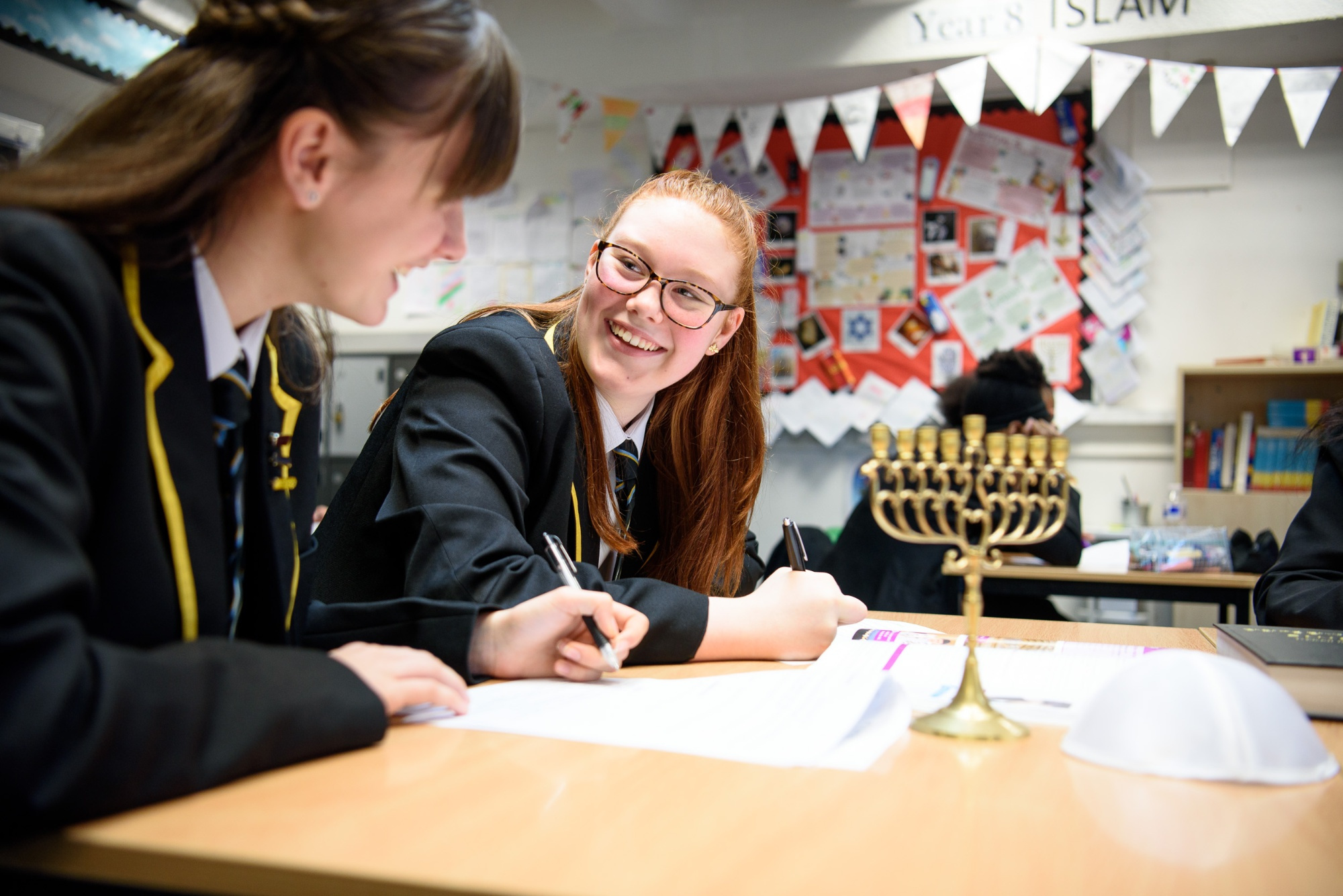
The RE department at De La Salle School are committed to recognising, valuing and educating every individual in their care as special and unique, created in God’s own image and likeness. Saint Pope John Paul II described RE in a Catholic school as the “core of the core curriculum.” The special role of Religious Education in the curriculum of a Catholic school enables the school to fulfil its mission to educate the whole person.
We have a dedicated and experienced staff who follow a scheme of learning designed around the requirements of the Catholic Bishops of England and Wales’ Religious Education Directory.
Key Stage 3
The KS3 curriculum has six branches rooted in the narrative of salvation history: Creation and Covenant, Prophecy and Promise, Galilee to Jerusalem, To the Ends of the Earth, and Dialogue and Encounter. As they revisit each branch in each year of school they come to a deeper understanding of its significance for Catholic belief and practice. The Directory divides what must be known by the end of each age-phase into six knowledge lenses: four cover the study of Catholicism: Hear (scripture); Believe (Church teaching); Celebrate (liturgy and prayer); and, Live (Catholic social teaching); and two cover the study of other religions and world-views: Dialogue (living in a pluralistic world); and, Encounter (study of other religions). As students’ progress through the curriculum they will develop the skills of understanding, discernment, and response. This means that for each new thing learnt they will remember it, critically analyse it and, consider how it might be put into practice.
Key Stage 4
At Key Stage 4 students follow a linear approach at GCSE. 100% of their final grade is achieved in Year 11, where they will sit three papers.
Component 1 is Foundational Catholic Theology which is worth 37% of the overall marks. This paper is split into two sections: Origins and meaning and evil and suffering. Students will study aspects of the origins of the universe, creationism, sanctity of life, revelation, symbolism and art as well as CST, CAFOD and SV. Evil and suffering will be explored including solutions and responses, Jesus moral authority, sculpture and statues and popular piety.
Component 2 is Applied Catholic Theology which is worth 37% of the overall marks. This paper is spilt into two sections: Life and death and Sin and forgiveness. Students will study Eschatology, rights to die, Magisterium and the 2nd Vatican council as well as exploring aspects of music, prayer and funeral rites. Students will explore the concepts of forgiveness, capital punishment salvation as well as evangelisation within Britain and worldwide.
Component 3 is the study of a 2nd world religion: Judaism. This paper is worth 25% of the overall marks. Students study in depth key beliefs and teachings, practices, acts of worship, festivals and how beliefs held affect the lives of both reform and orthodox Jews.
Curriculum Enrichment
Year 7 RE Trip to Neasden Temple – 23rd June
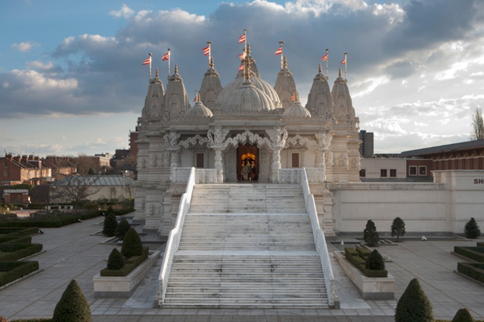
During the summer term, Year 7 were studying Hinduism. To give the students an opportunity to see a Hindu place of worship, we went to a Hindu Temple in Neasden called BAPS Shri Swaminarayan Mandir. The students visited an exhibition which told the story of Hinduism this gave them a good insight into the history of the religion.
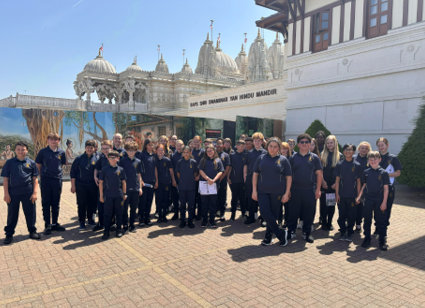
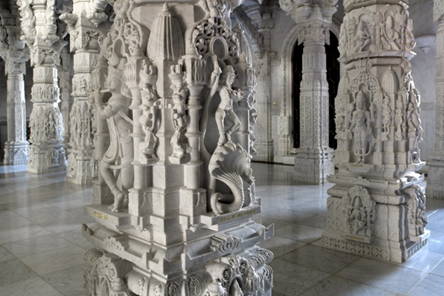
The highlight of the morning was participating in the Hindu Act of worship. The students were able to see what the worship ceremony was like and join in if they wished to. The Mandir was beautiful and the students were amazed by the stone carvings and detail that was in the walls and ceilings of the temple.
Considering it was an extremely hot day and the traffic was not in our favour, the Year 7 students behaved impeccably. They walked around the temple quietly and respectfully. They were a credit to our school.